
In a May post here at the Voices blog, I suggested that one of the things I thought colleges should be looking for from prospective students was civic engagement. Certainly, having students see themselves as actors and creators of history is one of my goals for my history students.
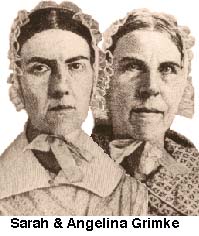 In our team-taught classes, my colleague Whitney Suttell and I emphasized periods in history in which ordinary citizens united to bring about change, to make their voices heard. From the Sons of Liberty and the choices made by colonial housewives to boycott British goods, to the many who wrote and demonstrated for and against the US Constitution between 1787 to 1789, to all the men and women who risked their lives to hear Angelina Grimke speak out against slavery in Philadelphia 1838, these and other early actions set into the American psyche from the nation’s earliest years a sense of the United States as place where citizen voices mattered.
The question becomes, how do we translate our students’ understanding of past actors into action by young people today? Whitney and I decided in March to chuck the traditional exam format and craft a project to help students make this connection.
We wanted students to act on their growing knowledge and to connect with others beyond our school walls. With this objective in mind we focused the project on three components: student interest, sustained research, and engagement with peers in school and elsewhere who shared their interests or were leaders in one way or another.
Student interest builds engagement
Student engagement depends upon interest. Perhaps one student lives and breathes music, another student has a natural gas well going up in her backyard. A third student loves sports and worries about all the negative coverage their favorite sport is generating, a fourth student is curious about an issue discussed earlier in class. In each of these cases and those of our 28 other learners, student choice and agency in that choice provided each student with a way into this project.
In the written self-reflections at the end of the project one student shared that he had thought this was going to be a stupid project, that he hated politics and had thought he would have to pick some topic related to the election. Instead, his focus was on developments in robotics. All year he had found sustained follow-through difficult. In this case, he consistently read new articles and blogged about them on time. Too often we think of history in terms of politics, presidents, panics, wars and economic booms. This student came to connect developments in robotics with the earlier transformation wrought by the cotton gin and the telephone — the good, the bad, and the social implications.
Students need to find a way into the study of their history and their roles as citizens. Interest, within the context of this course, proved a powerful connector. I have seen this same connection happen in language classes when Spanish II students join a Spanish language discussion forum dedicated to an appealing topic.
Deepening the exploration of topics
Having chosen topics ranging from puppy mills, to invasive species, to the military and the draft, to anorexia, to fracking, to robotics, to head injuries in sports, and many others besides, for three weeks students read recent articles and blogs on their topic.
Each week students were to choose something from traditional news sources such as the New York Times or CNN, as well as less traditional information sources — blogs about natural running or advocacy websites such as Riverkeeper. Each week in our discussion forum they wrote summaries and analyses of the articles they were reading. Then they commented on each other’s entries, offered insight and suggested links.
 In a few cases, they pushed back. For a student following the court challenges to Arizona’s immigration law, a friend replied with her own link and another area of the issue worth considering. This sort of community learning enlarged the focus of some students’ topics. A student following head injuries in football had written that football players should know they played a violent sport and not hold the NFL responsible for injuries. Another student pushed back and asked whether coaches might not be equally responsible for knowingly sending injured players back on the field. The discussion forum was one of the liveliest we have had to date.
In our debrief following presentations, we asked students whether or not three weeks was the right amount of time. Overwhelmingly, students wished this project had been modified to extend over the whole term. Many felt they were just beginning to understand all the nuances and aspects of their topic.
Moving to involvement and activism
From the beginning, we asked our students to consider how they might join in the ongoing public discourse on their topic. Some students added comments to articles they were reading, others wrote letters to editors and their local elected officials. Still others wrote to advocates for a particular cause.
We wanted students to find others interested in their interests and to connect with them where possible. One student corresponded with a friend at a school with a one-to-one tablet program. She then wrote a letter to our Principal about the reasons she believed we should adopt such a policy. Another student corresponded with an immigration lawyer in Los Angeles, wanting to better understand the issues from the lawyer’s point of view.
As the final individual step, students wrote essays summarizing what they had learned about their topic and how it related to their sense of what it means to be an engaged citizen. Of her first-ever comment on an online news article, one student wrote: “I found that my sense of citizenship, by contributing to one of the articles, was strengthened because I felt that I had a political voice, however small it might be.”
She was one of my quietest students, but she had put herself out in the middle of a heated and divisive issue and done so with a level of civility and honesty too often lacking in our public discourse. In class we discussed her reply and students assessed whether or not strident, winner-takes-all rhetoric works better than a more tempered approach. One of my students wondered if the most effective approach might be influenced by whether the goals were long term or short term.
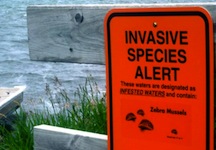 Another student pursued an issue that even his peers felt was a bit ho-hum: invasive species. In his final essay he wrote, “My research on invasive species has lead me to believe that in order to be the best citizens we can, we have to be thoughtful in our actions so that we do not create problems in the future, but also we have to be willing to lend a hand and help solve these problems when they arise.” He felt that his peers’ indifference revealed one of the many challenges activists face –even when there is a direct demonstrable cost being borne by those who remain unaware.
A third student followed Fracking. Until we started the project, he hadn’t realized it was an issue in his own New York State. He wrote: “For me, voicing my opinion on an issue of the wider community is a way to stay connected and involved in the world I live in. Writing letters to people in the state government gave me a greater sense of my responsibility as a non-voting citizen. Following current events, voicing my opinion, and acting on my beliefs are the most effective ways to be an active citizen.”
Wrapping up and lessons learned
For our final exam, students worked in groups to translate their individual projects into a coherent means of understanding their world and then to present their conclusions to the combined classes – 32 students, 8 presentations. The presentations were not to be summaries of individual projects. Instead, shared themes were to be explored and conclusions argued and defended. In all cases the presentations were much better than previous ones (our efforts were bearing fruit!). In one case, two boys who had been complete underachievers all year joined with a third to put together an excellent presentation on the shared responsibility of athletes and athletic organizations to understand and mitigate the risks of sports injuries.
 Following the presentations we asked students to help us understand how to make this project better the next time around. One student commented on the way in which the project helped her make better sense of US history in a personal way. In particular, she reflected on the ways that the meaning of freedom has changed over time — and how her topic, school stress and depression in students, helped her better understand distortions in our current educational climate.
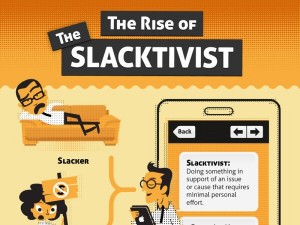
We asked students whether commenting on an article, joining a discussion forum at an advocacy website, or writing to a state Senator made them feel sufficiently involved or was this just slacktivism? The students felt that what elevated this beyond simply clicking “like” on Facebook was that they had been following the story for a few weeks and trying to find sufficiently balanced sources to develop a better understanding of their topic. One student wanted to let the group off the hook by pointing out that they couldn’t vote yet. But another student pointed out that women hadn’t waited for the vote to oppose slavery and advocate for temperance.
In sum, students wrote one last essay, in every case the best of the year. They made one last collaborative presentation. Most importantly, students reflected on the meaning of freedom and citizenship in 21st century America and they connected beyond the walls of our school. In 2012-13, we hope our experiment will become the way all Westtown’s US History sections end the year.
To return to a point made in my earlier Voices post, none of this could be captured in the SAT II US History subject test. Instead, the themes our students discussed and explored over the course of the year found expression in the actions of these young citizens.
I really appreciate this kind of activity. You should be proud. Your students should be proud. This is how teaching and learning should be!
Dear Scott,
Thank you so much. I am looking forward to doing this again in the upcoming year.
I really enjoyed the article but I would like to know more about the mechanism for drawing the current events and the history together. Looking at different news sources will not do that. How did you, specifically, help the students tie in the current with the past?
Dear Jenny,
In the early fall we spent time examining the many ways in which ordinary citizens had boycotted and protested in the period leading up to the American Revolution. During our study of the Second Great Awakening the students did collaborative research projects on a variety of topics from anti-prostitution, to prison reform, to abolition, to missionary and bible societies–the gamut of reform efforts of the period. We also read a selection from Alexis de Tocqueville in which he described America as a nation of associations. In our look at the Progressive era the focus was again on ordinary citizens coming together to work with leaders to effect change. Throughout the year in our ongoing consideration of current events we revisited the activities of various 21st century activist groups such as the Tea Party and The Occupy Movement, the Chester County Peace Movement and others active in our area. This theme of citizen action was the tie in of the present with the past. In a limited manner these students were taking the first steps in the path of the many men and women who joined the American Anti-Slavery Society or were active in the settlement house movement.
Great activity, i do something similar with the declaration of independence!
We spent a few days during our study of the Bill of Rights connecting current issues with specific amendments.
How do you shape your Declaration of Independence project?
Margaret, What a great idea! I am looking to change my world history course next year and will piggy back on your idea having my students explore a topic related to the Ancients and Roman time periods and try to connect it to the present. It must have been exciting to see your students actually take their learning to the next step of true ownership. Thanks for sharing. One question, did you have your students post or share on a wider forum? If not, why?
Dear Sue,
For the Bill of Rights Project we were using a class discussion forum in Moodle and students shared and discussed in class. I think the idea of connecting students with students beyond Westtown in this topic is something we will pursue this year.
For the engage citizenship project students had to connect outside of Westtown. We worked with the students to help them decide on appropriate and viable ways of contacting experts, other concerned activist groups, their local representatives either state or national, or replying to news stories and blogs.
As I’ve been pondering a new class I’m about ready to teach, I read your post with great interest. It’ll involve starting with questions from students, issue searching, research, writing letters, presentations and reflection before-during-after the process. I like the idea of students commenting on each other’s entries.
Did students post on a blog, moodle, or just swap journals? I had planned to have students maintain a progress journal, report to the larger group (only 6-10) and in smaller groups or pairs, but the thought of having them use a blog (I’m not familiar enough with moodle) may interest them. Since some will be taking this in combination with an American history/lit course, the frame of activism might also just be what I need to pull the course together, though it wasn’t my original intent. Thank you for sharing your ideas!
Within Moodle, the Learning Management System we use at Westtown School, there are both discussion forum and blogging modules. In the spring we used the discussion forum module. Students posted their topics, their findings and shared ideas with each other. This summer, I am using the blogging module. I want students to have a more threaded approach to their own project even as their peers comment on each other’s work. By using the blog/forum we had a wider audience for each student’s work (two sections = 36 students)and we exposed each student to work beyond their own focus.
I like your idea of having them work and share in small groups of pairs as well. Why not have two-three students serve as a “support” group for each other with responsibilities for offering constructive criticism, help with finding sources, sounding boards for ideas. What a great opportunity for students to practice listening to a peer and learning to ask the sort of questions that help that peer develop an idea (rather than just “that sounds so cool. I like your idea”).
Dear Margaret,
I think this is the kind of engaged teaching that makes a difference in someone’s life. The part that makes it important is how well it connects students to their world both past and present.
These big themes are the means to tying all these little pieces of seemingly unrelated/meaningless bit of info. and Big connectors pull on the knowledge that is transferable between disciplines. It’s something that is powerful and activates the student’s intellectual side…something I fear we too often ignore in the quest for our class to be “fun”.
Back in my day, we looked to classes like debate to do this for us. I debated in the 1960s and my daughter debated in the 1990s….both us learned how to research,apply, describe and defend our ideas around a topic. It’s been amazing to use how those skills (which is what I think you’re using in your class too) have shaped our professional careers which are far, far removed from the debate class.
Congratulations on using this approach….I think it will help your students for many years to come.
Dear Marsha,
Thank you for your comment. I really liked being reminded about debates and thinking about them as connectors. I cycle through debates, papers, projects as unit assessments. I think I will tweak my debate topics/format to pull on this idea of connection across discipline.
please add details about teacher use with moodle use and students comments, did you design the moodle modules? please show the questins you had posted, i am interested in how wide a scope was suggested your topic to your students and their repsponses ( please hide their names for privacy)-
Margaret, I really enjoyed your post and appreciate the tremendous value of your project design. I would love to integrate this kind of project in my history class. Having several ELLs and students with special education needs, I wonder how you might modify this project in order to accommodate these student populations?
Getting education is a birth right of every individual. Keeping this fact in mind many colleges and universities located all over the world are engaged in offering special education help courses in order to meet the rising demands of the students throughout the world. Such kind of courses are also designed and structured for the disable students who otherwise face difficulty in getting education. These days, a new revolution has taken place in the field of education which is beneficial only not for the students but also for the parents. ;
Have a look at the helpful article on our personal web blog
<http://www.healthmedicinelab.com/cellulitis-pictures/
But will it be enough to pave the way for another successful season of The ultimate fighter?
The following is the full results of episode 2, as well as who Chuck’s opponent will be after the show. The ultimate fighter: Faber vs. The following is the full results of episode 2, as well as injuries and lots of blood, the fights were some of the most exciting, and impressive of any season yet.
Here is my blog post; UFC